Dubai
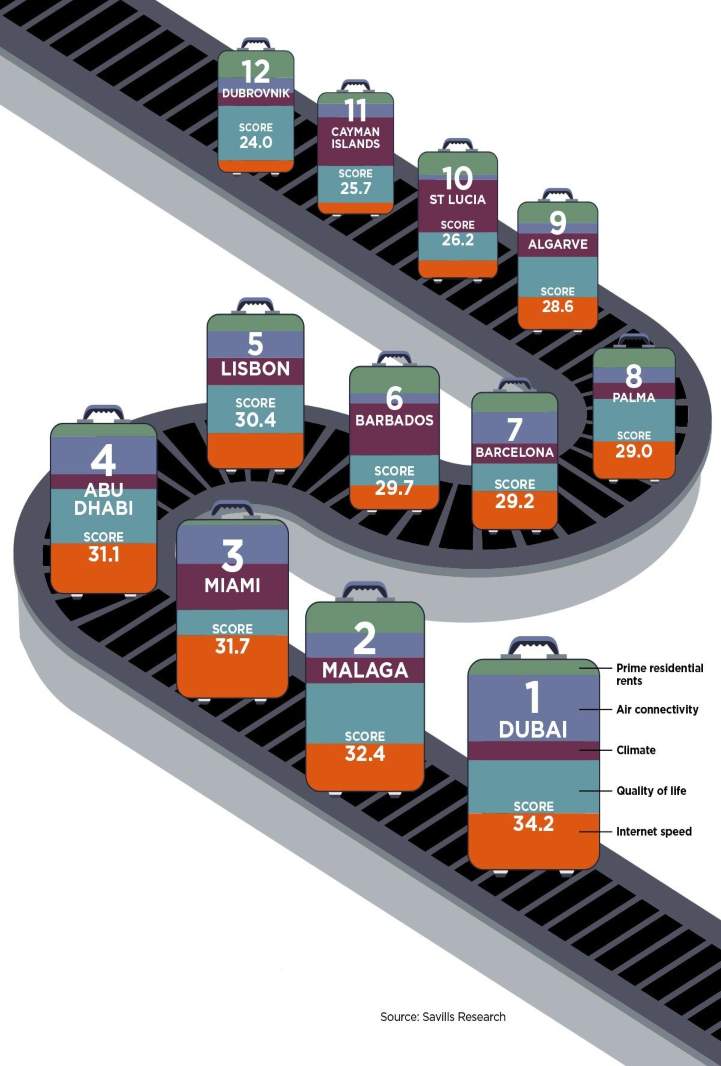
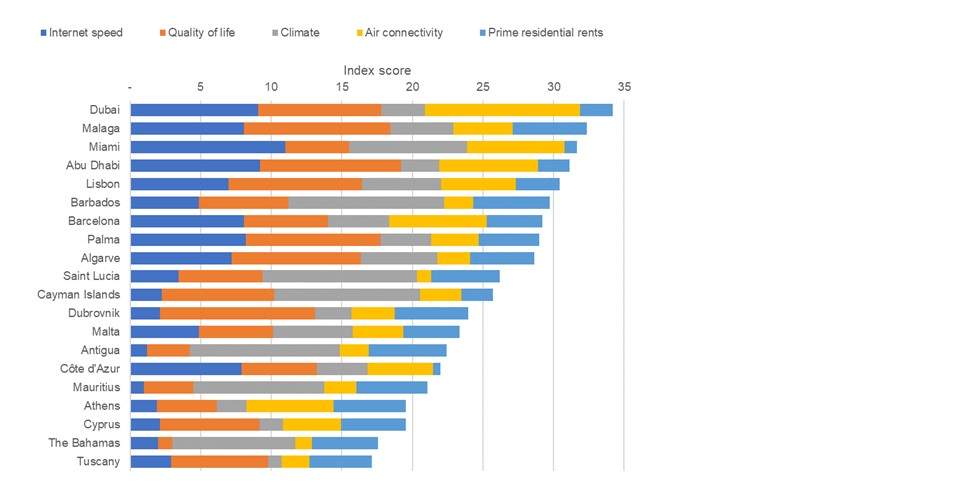
Executive Nomad Index rank: 1
Dubai’s fast-growing fintech and financial services sectors – along with a tax-free environment and high quality of life – are proving powerful magnets for executive nomads seeking a new challenge.
“Many have been impacted by layoffs across global tech firms,” says Swapnil Pillai, Savills Middle East associate director of research. “They are exploring the city as a base to support these thriving sectors.”
Most are Dinkies (Dual Income, No Kids), observes Pillai, and they favour high-end residential buildings in Downtown Dubai, close to the financial hub (DIFC), or in Dubai Marina for proximity to Media City and Internet City.
“Most of the city’s co-working spaces are operating at near 100 per cent occupancy, which supports Dubai’s ranking as a top destination for executive nomads,” Pillai says.
Dubai also scores highly on both types of connectivity. Dubai International, its main airport, is now the world’s busiest for international passenger traffic. Meanwhile, Dubai’s investment in its digital infrastructure – with the UAE now home to the fastest mobile internet speeds in the world – has pushed the Emirate into our top spot for executive nomads.
Málaga
Executive Nomad Index rank: 2
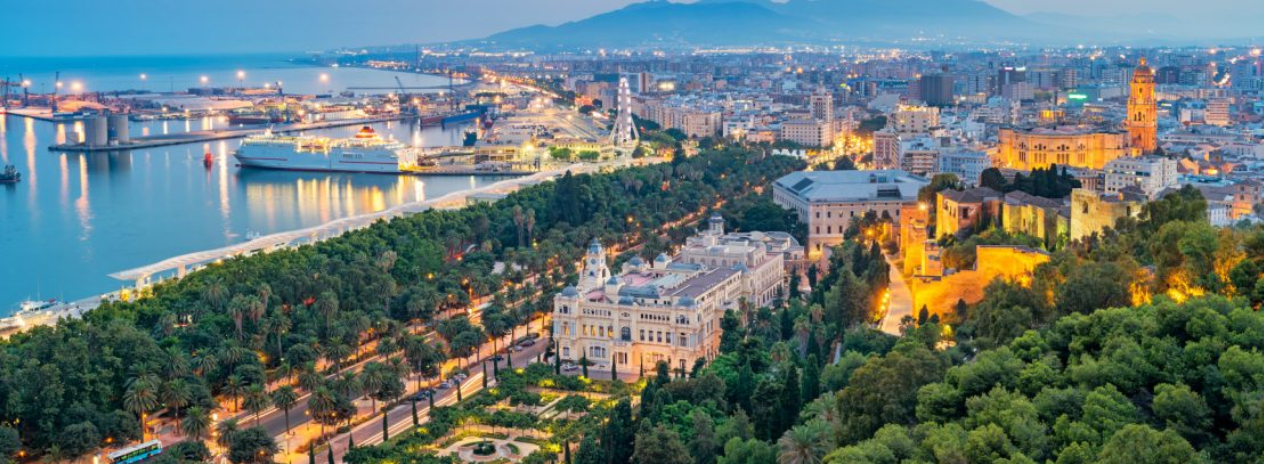
The Andalucian economic capital has in recent years been upping the ante as a major cultural and tourist destination, known for its superlative museums and beautiful old town. Now high-profile corporate arrivals such as Google have given Málaga the seal of approval in a different sphere.
“These companies are all saying that Málaga is the place to be and its reputation then spreads by word of mouth,” says José Felix Perez-Peña, Savills head of Andalucía.
Restaurants, renting and socialising in Málaga are still cheap compared with other major European cities, and people feel “safe” there, says Perez-Peña.
Where the wealthy have traditionally gravitated to large villas on the east side, the west is the new focus of regeneration and landmark developments. These include Sierra Blanca Tower, whose prices have set a new benchmark for Málaga at around €10,000 per square metre ($1,000 per square foot).
Typical prime residential rents are €15-€22 per square metre ($1.50 to $2.20 per square foot), but there is a lack of stock to meet demand.
“Executive nomads want everything ready when they move in, including furniture and internet connection,” says Perez-Peña. “We’re seeing lots of new companies now catering to this market, but there aren’t enough properties available.”
He adds that there is also a shortage of high-quality office space and co-working spaces. “We haven’t been building enough to meet demand.”
Miami
Executive Nomad Index rank: 3
Sunshine, low tax and a fine line in magnificent beaches have long made Miami a go-to staple for Americans seeking a better quality of life. The current influx of executive nomads includes émigrés from financial companies in New York and Chicago.
“This affluent demographic has driven demand for luxury property to its highest levels and made the search for private schools more challenging for those moving here with families,” says Cyril Bijaoui, broker associate at Corcoran.
They like areas such as Miami Beach, Coconut Grove, Coral Gables and Key Biscayne and prefer single family homes) over condos. Those looking to rent prior to buying will find price rises have now calmed slightly, after a period of rapid inflation in addition to very high demand and short supply, Bijaoui notes.
However, around half of executive nomads – many of whom are thinking long-term and have signed 10-year-plus commercial leases for office space or bought commercial properties – buy a home.
“They generally prefer not to waste money on rent,” says Bijaoui. “They are accustomed to owning and not afraid to resell and move.”
Abu Dhabi
Executive Nomad Index rank: 4
A new entry in the Savills Executive Nomad Index this year, Abu Dhabi isn’t trying to copy its neighbouring Emirate, believes Stephen Forbes, Savills head of Abu Dhabi.
“Abu Dhabi has become far more outward-looking in the last two years and there is so much on offer now, including Yas Island, a huge leisure destination, and Saadiyat Island, where you have the Louvre and the Guggenheim, which is due to open in 2025,” he says.
The Emirate is proving particularly popular with Northern European executive nomads. A remote working visa is available, and for those making a longer term commitment golden visas are designed to attract property investors and global talent in the creative industries, financial services and start-ups.
“Abu Dhabi’s Free Zones, which offer various incentives to companies, make the city far more attractive to corporate entities now, too,” says Forbes. “Demand for Grade A office space in our Central Business District has never been higher.”
Foreign nationals can only buy property in designated areas, including Saadiyat, Yas and Al Reem islands, and Raha Beach. Rental apartments in new developments cost from around 120,000-200,000 AED ($33,000-$54,000) per annum for a one-bed apartment.
World-class healthcare ticks a further box for executive nomads – and there is an ever-growing range of cool, indoor leisure and entertainment options to escape the intense summer heat.
This article was originally published in Savills Impacts.