
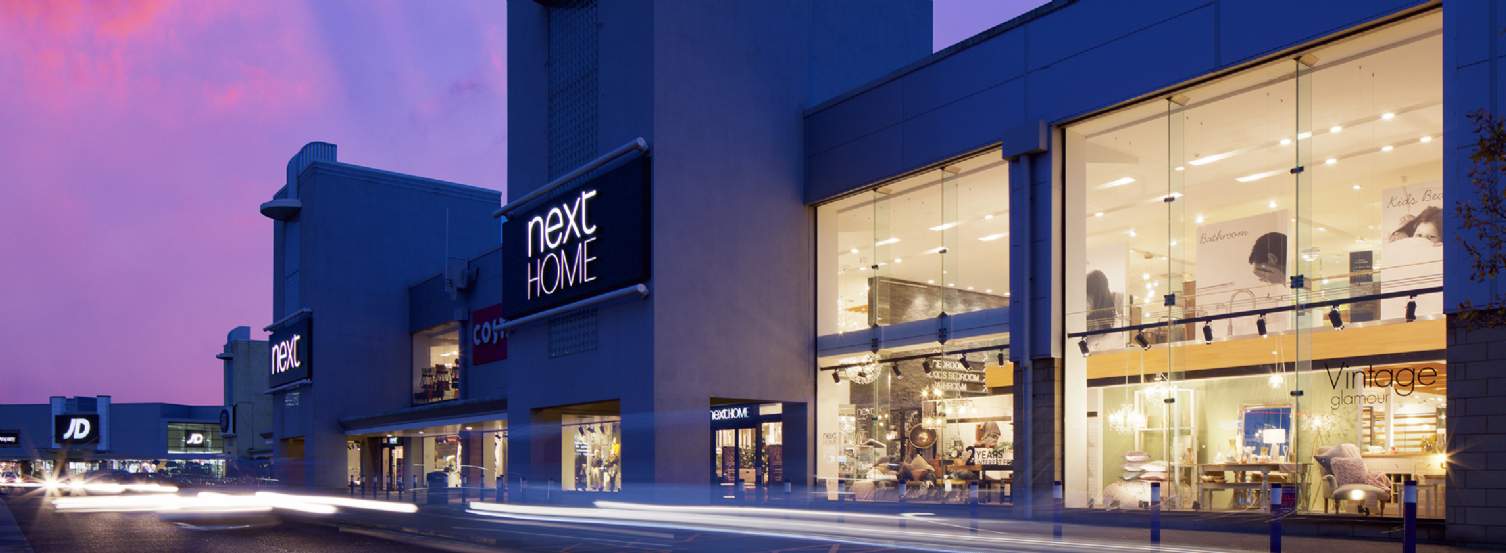
Out-of-town retailers fight for space in an increasingly 'sticky' market
KEY TAKEAWAYS
Occupational
- Value and essential retail remain major drivers of demand. Home Bargains leads the ranking of the most acquisitive retail warehouse brands in Q1–Q3 2026 with 20 acquisitions. Other value and grocery operators among the top 15 include Lidl (19), Iceland Food (11), Aldi (8), Sainsbury’s (7) and B&M (5). Together, these operators account for 70 acquisitions, exactly half of the top 15 total.
- Grocery expansion remains particularly important. Lidl, Iceland, Aldi and Sainsbury’s alone account for 45 retail warehouse acquisitions in Q1–Q3 2026, illustrating continued demand for accessible out-of-town (OOT) locations from foodstore operators. M&S has also completed 11 acquisitions, reinforcing the growing appeal of OOT locations to established national brands combining food with a broader retail offer.
- Gyms are now a meaningful component of retail warehouse demand. PureGym is the third most active occupier with 13 acquisitions, while The Gym Group have taken 8 and JD Gyms has taken 6, reinforcing the continuing diversification of retail parks into frequent-visit leisure and service uses.
- Demand extends well beyond value and grocery. Mountain Warehouse (10), Skechers (7), Dreams (6), Next (5) and Tapi (5) demonstrate continued appetite from fashion, footwear, home and specialist retailers. This breadth is important because occupational demand is not dependent solely on the traditionally defensive parts of the market.
- Traditionally high-street and shopping-centre-oriented brands continue to expand through larger-format locations. Marks & Spencer has completed 11 acquisitions, while the presence of Next and Skechers among the most acquisitive operators reinforces the appeal of accessible OOT locations to established national brands.
- The breadth of demand should help the sector absorb retailer failures and estate rationalisation. In the context of Poundland’s current difficulties, good-quality space returned to the market could attract interest from several occupier categories rather than automatically translating into prolonged vacancy, although location, unit configuration and covenant will determine how quickly individual units are recycled.
Space is becoming the scarce commodity
Retail warehousing is facing a supply problem. Outside bespoke discount grocery stores, selected roadside food and beverage schemes and drive-thru formats, almost no significant new retail park development is coming forward. Existing occupiers are also increasingly reluctant to release successful stores, meaning the principal constraint on expansion is not a lack of demand but whether a suitable unit becomes available at all. Less than 1% growth in overall retail warehouse supply has been recorded in four of the last five years. In 2025, 9.2 million sq ft of new lettings represented only 2.2% of total market stock. Supply increased by just 0.4% during the first three quarters of 2026, while newly let space accounted for only 1.1% of the market.
Retailers recognise that representation on a successful retail park may be difficult to replace if surrendered. Across Savills deal book of new lettings, regears and renewals between 2023 and 2026, only 8% of occupiers vacated, meaning 92% renewed their lease commitments. Where operators do move, it is typically to rightsize, secure a better-configured unit or improve their pitch within a town, rather than leave the market altogether.
This has created an increasingly 'sticky' occupational market. Lease expiries, relocations and portfolio reviews would once have returned a regular flow of units through which landlords could refresh tenant line-ups. Today, limited churn is restricting opportunities for incoming and expanding brands.
Falling transaction numbers therefore reflect a shortage of opportunities rather than any meaningful moderation in demand.
Sam Arrowsmith, Director, Commercial Research
There have been just 373 new lettings so far in 2026 up to the end of Q3, around half the 721 recorded during 2025, which was itself below the 15-year annual average of 847. Falling transaction numbers therefore reflect a shortage of opportunities rather than any meaningful moderation in demand.
Vacancy has fallen from 4.3% at the end of 2025 to 3.9%. Some of this reduction reflects long-standing vacant space being repurposed and removed from the available retail supply, but the practical result is the same: retailers are competing for a shrinking pool of suitable units.
While this has yet to translate into meaningful growth in overall retail warehouse supply, the imbalance between supply and demand is increasingly encouraging occupiers to pursue bespoke development where suitable opportunities can be found. Aldi and Lidl have long used purpose-built stores to support their expansion programmes, as have QSR operators such as Costa and Starbucks. However, this approach is increasingly evident across a broader range of occupiers, including M&S, Wickes and B&Q in DIY, Home Bargains and B&M in discount variety, and The Gym Group, PureGym and JD Gyms.
These are typically individual units or ad hoc development opportunities rather than major new retail park schemes, but their emergence demonstrates how the shortage of suitable existing stock is beginning to shape occupier expansion strategies. Build costs remain a further constraint. Recent inflationary pressures have the potential to feed through to construction costs, raising the prospect of further increases and keeping the viability of new development challenging.
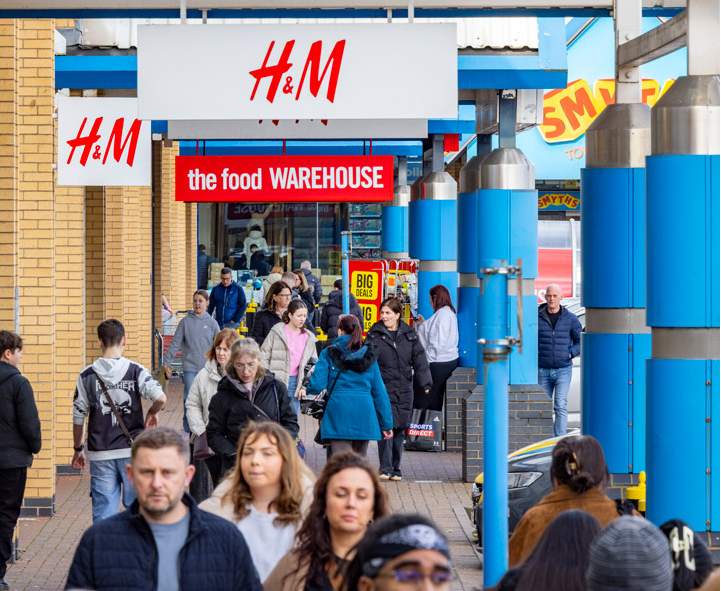
VENTURA RETAIL PARK, TAMWORTH
Rental growth pauses as occupiers absorb higher costs
Ordinarily, constrained supply, falling vacancy and healthy demand would be expected to generate stronger rental growth. However, net effective rents have increased by only 1.7% so far in 2026, following growth of just 0.1% last year.
This reflects the tension at the heart of the market. Scarcity and strong retailer demand are supporting rents, but macroeconomic uncertainty, rising operating costs and pressure on consumer spending are limiting the extent to which operators can absorb further increases. For landlords, the difficulty of regaining possession also limits opportunities to establish fresh rental evidence and demonstrate rental growth.
That headline figure also masks considerable variation by asset quality.
Rental performance is increasingly scheme-specific, with prime parks in strong catchments and deep occupier demand continuing to deliver meaningful growth, while secondary and tertiary locations have seen much more limited progression. As a result, average rental growth in 2026 may be muted and below inflation, but that does not necessarily reflect the experience of the sector’s best assets.
The picture is more complicated for units above 20,000 sq ft, where average rents declined by 10.3% during 2026. This does not signal a structural reduction in demand.
Instead, it primarily reflects a change in the quality of stock being transacted.
The administrations of Homebase and Carpetright released a pool of larger units during 2024 and 2025, many of which were in strong locations and had already survived substantial estate rationalisation. Competition for the best of these opportunities generated exceptional rental growth (figure 6). Those stores have now largely been absorbed, leaving a more secondary selection of units in terms of location, configuration or condition. Put simply, the best space was taken during 2024 and 2025, while the units transacting today are achieving less.
Even after this year’s correction, the average rent for units above 20,000 sq ft stands at £13.74 per sq ft, 14.3% above its pre-administration level in 2023. Where schemes are well located and occupier demand is deep, further rental progression remains achievable.
Drive-thru and drive-to quick-service restaurants continue to outperform. Savills data shows net effective rents reached £51.06 per sq ft in 2025, representing annual growth of 9.5%. Competition between operators, alongside rising development and conversion costs, continues to place upward pressure on rents and sustain a substantial premium to conventional retail warehouse space.
Alternative uses are also absorbing units that might otherwise have remained vacant. Padel operators, for example, are taking larger, lower-rented space that can be more difficult to relet to conventional retailers. This is bringing long-standing voids back into use but simultaneously removing further stock from the retail occupier market.
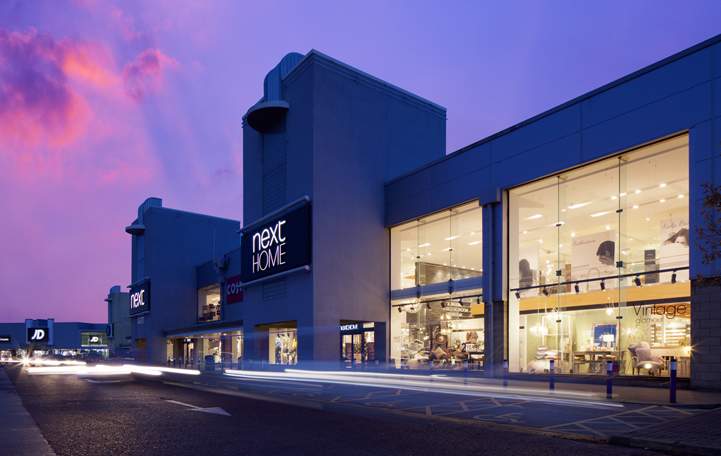
COLISEUM SHOPPING PARK, ELLESMERE PORT
Demand is broadening beyond the sector’s traditional core
The market’s increasing “stickiness” reflects more than simply a lack of available space; it is also being reinforced by strong and increasingly broad-based expansionary demand. The 15 most acquisitive retail warehouse occupiers have taken 140 units by Q3 2026, led by Home Bargains with 20, Lidl with 19 and PureGym with 13.
Value and grocery remain the bedrock of activity. Home Bargains, Lidl, Iceland, Aldi, Sainsbury’s and B&M collectively account for 70 acquisitions, exactly half of the top-15 total. Grocery operators alone have continued to target accessible sites with strong catchments, good car-borne access and sufficient space for click-and-collect and fulfilment.
However, demand is no longer reliant solely on these defensive categories. PureGym, The Gym Group and JD Gyms have taken a combined 27 units, while M&S, Mountain Warehouse, Skechers, Dreams, Next and Tapi demonstrate continued appetite from fashion, footwear, home and specialist retailers. The move by traditionally shopping centre- or high street-oriented brands towards larger out-of-town formats is particularly important, broadening the depth of demand for well-located space. More recent lettings to Rituals and Oliver Bonas provide further evidence of this evolution, with aspirational brands also willing to consider selected retail park locations.
This diversity should help the market absorb units released through retailer restructuring. Strong locations are increasingly capable of attracting interest from several occupier categories, reducing the risk that individual failures translate into prolonged vacancy. Unit configuration, planning, condition and covenant will determine the speed of reletting, but the breadth of active requirements provides a substantial occupational buffer.

THE GYM GROUP, MIDSOMER NORTON
Operator performance remains uneven, but the format is resilient
Trading across retail warehouse-focused operators remains mixed, reflecting the divide between resilient everyday spending and more considered big-ticket purchases. Wickes has been one of the stronger performers, with Q3 group revenue up 4.5% and Retail like-for-like sales up 5.6%, including mid-single-digit DIY growth and an 8% increase in TradePro sales. However, Design & Installation like-for-like sales fell 0.6%, with customers becoming more cautious around larger projects, highlighting the continuing divide between smaller home improvement spend and more expensive projects.
Performance across homewares and electricals has also been positive but uneven. Dunelm reported Q1 sales growth of 1.1%, although sales recovered from a c.3% decline during the first six weeks to c.4% growth in the final seven, while Currys reported 6% UK & Ireland like-for-like growth, albeit with the World Cup and summer heatwaves providing a temporary boost to electrical demand. The Range provides further evidence of the strength of value-led home retailing, with like-for-like sales increasing 2.6% and total sales up 16.4%, predominantly reflecting the addition of 53 former Homebase stores.
Value retail itself presents a similarly mixed picture. B&M's UK like-for-like sales increased just 0.4% in H1, but this masks a marked improvement from a 2.3% decline in Q1 to 3.2% growth in Q2, suggesting its turnaround is gaining traction as consumers remain focused on value.
Grocery remains comparatively defensive, although performance continues to diverge between operators. Aldi and Lidl remain important beneficiaries of consumers’ focus on value and continue to expand their out-of-town estates, reinforcing their importance to retail warehouse demand. At the same time, M&S Food’s 13.9% sales growth in H1 demonstrates that value does not necessarily mean low price, with investment in quality, innovation and its food proposition continuing to encourage consumers to trade up where the perceived value is strong. By contrast, ASDA remains under pressure following a prolonged period of underperformance, with Q3 like-for-like sales excluding fuel down 0.1% and food sales up just 0.1%, despite continued investment in price.
Collectively, these results point to resilience rather than a broad-based recovery. Value, grocery and smaller DIY or replacement-led purchases are generally holding up better than larger discretionary home improvement projects, although operator-specific execution remains increasingly important. Crucially for the property market, uneven trading has yet to translate into any meaningful weakening in demand for retail warehouse space.
The strength of value retail nevertheless requires some nuance. A more price-conscious consumer does not automatically translate into stronger performance for every value operator; increasingly, perceived value matters as much as absolute price. Poundland’s recent difficulties demonstrate the limitations of a proposition historically built around a fixed low-price model, which has become harder to maintain as costs and prices have risen.
By contrast, operators such as B&M and The Range have developed broader propositions where value is based not simply on being cheap, but on offering choice, recognisable products and acceptable quality at prices consumers perceive to be competitive. M&S Food demonstrates the same principle from a different direction: consumers remain willing to pay more where quality and differentiation justify the premium. More broadly, defensive categories provide a supportive backdrop, but proposition and execution ultimately determine which operators capture that spend.
Retailer distress will create churn, not a vacancy shock
Recent retailer distress is a reminder that strong property fundamentals do not insulate individual businesses from rising wages, energy costs, weak consumer demand or execution failures.
Poundland remains in rescue talks after securing an extension of creditor protection until 26 November, with discussions continuing over both a sale of the whole business and offers for significant parts of the estate.
For retail warehousing, the property implications remain manageable. Poundland has c.122 retail warehouse stores extending to approximately 1.3 million sq ft. If all were returned to the market, sector vacancy would rise from 3.9% to around 4.3%, returning only to its level at the end of 2025. In practice, the impact is likely to be smaller, with better-located and suitably configured units likely to attract interest from value, grocery, home and other expanding operators, while weaker stores will face a more selective market.
Shoe Zone is also rationalising its portfolio, but this represents a reconfiguration rather than a withdrawal from physical retail, with the operator continuing to favour larger-format stores. Together, these restructurings should create some welcome occupational churn without materially changing the sector-wide supply position.
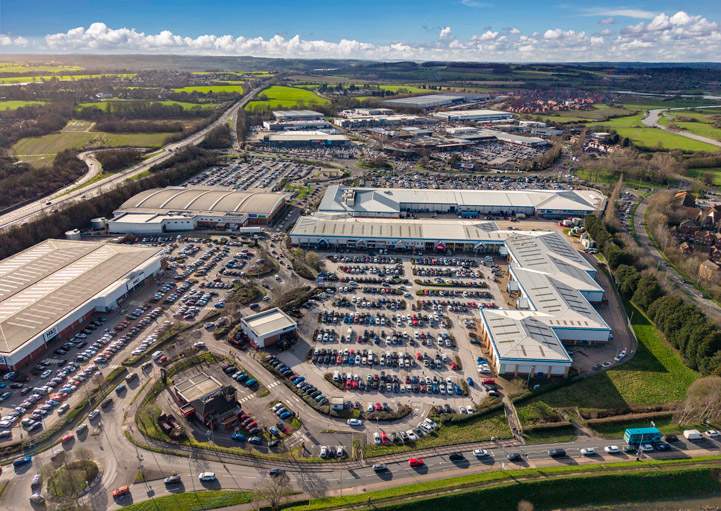
VENTURA RETAIL PARK, TAMWORTH
Occupational outlook
Retail warehouse fundamentals remain strong, underpinned by constrained supply, low vacancy and broad occupier demand.
The defining occupational story is increasingly the scarcity of suitable space. Weaker consumer confidence and rising operating costs may temper rental growth, particularly for secondary stock, but are unlikely to reverse it across the best schemes.
Looking ahead, rental progression is likely to be steady rather than spectacular. The latest IPF consensus forecasts point to retail warehouse rental value growth of 2.3% in 2026, 2.1% in 2027 and 2.0% in 2028, averaging 2.2% pa over the five years to 2030. Constrained supply remains supportive, but wider economic and fiscal pressures will limit how aggressively retailers can absorb higher rents. Equally, limited churn gives landlords fewer opportunities to regain possession and establish new rental evidence. Rental growth should therefore accumulate through individual deals rather than a flood of open-market evidence.
Larger-format rental evidence may remain volatile as the mix of available stock changes, but the rapid absorption of former Homebase and Carpetright units demonstrates continued demand for good-quality space. The decline in average rents above 20,000 sq ft should therefore be viewed primarily as a mix effect rather than weakening demand.
Beyond the golden quarter, retailer requirements are likely to become more selective, but not materially weaker. Operators will prioritise dominant parks, proven catchments, efficient units and schemes that support omnichannel fulfilment. Landlords may need to be pragmatic on incentives or capital contributions where space is secondary but should retain pricing power for the most sought-after units.
The present period of modest headline rental growth is best viewed as a pause within the wider recovery rather than a turning point. Occupiers are protecting successful locations; alternative uses are removing obsolete or difficult space and there is no meaningful development pipeline capable of easing supply pressures. For retailers seeking the right unit on the right scheme, competition will remain intense. For landlords and investors, this scarcity continues to underpin one of the strongest combinations of occupational resilience and medium-term income growth prospects in UK commercial property.
Read the articles within Spotlight: UK Retail Warehousing below.
